
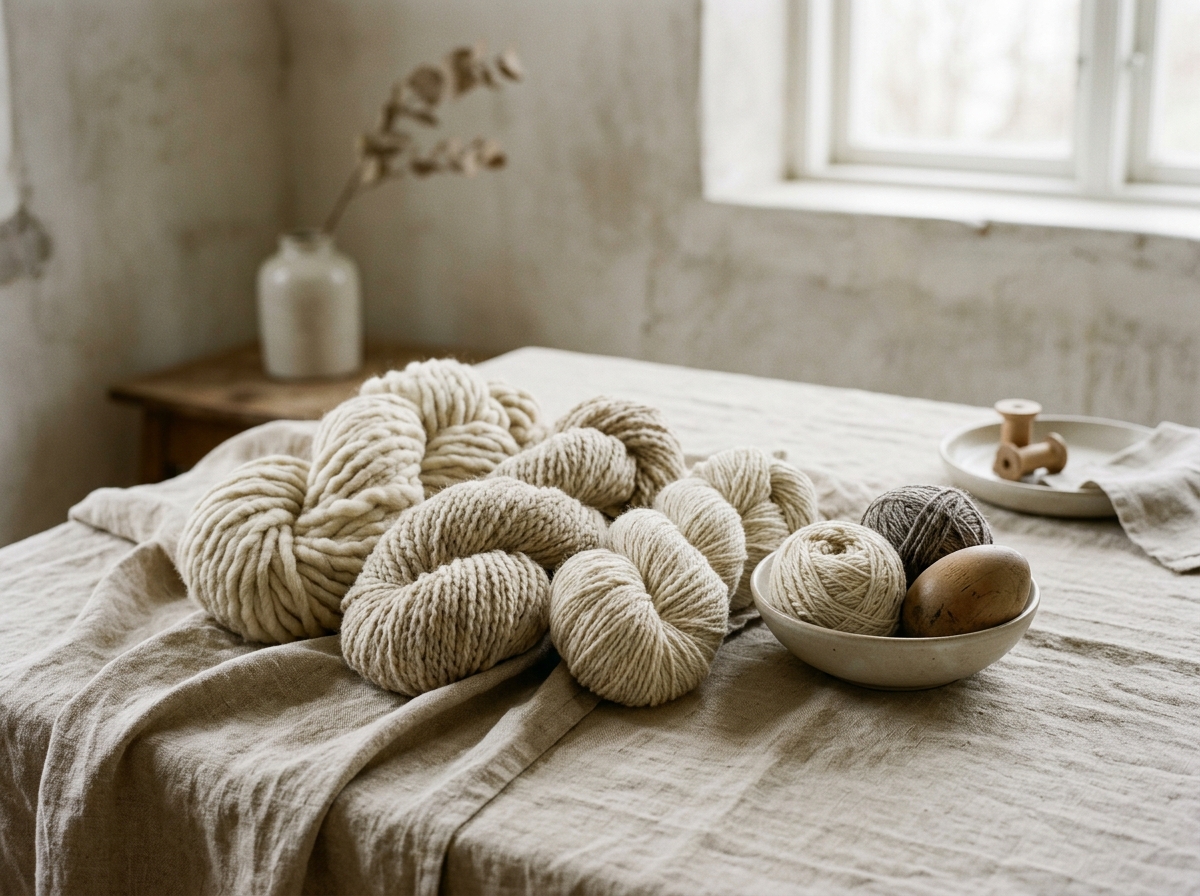
In an industry dominated by vibrant chemical dye baths and synthetic color treatments, undyed wool stands out as a triumph of quiet, raw beauty. By entirely bypassing the intensive boiling, bleaching, and chemical dyeing processes that consume millions of gallons of water annually, undyed wool preserves the natural fleece tones of heritage sheep breeds. From soft oatmeal cream and silvery slate to deep peat brown and charcoal, nature offers an astonishingly rich palette.
Beyond its low environmental footprint, undyed wool retains its natural lanolin content—the protective wax secreted by sheep that gives wool its water-resistant and self-cleaning qualities. Industrial chemical dyeing often strips lanolin away, requiring synthetic coatings to restore soft texture. Undyed wool, in contrast, maintains its natural elasticity, soil resistance, and natural thermoregulating properties straight from the pasture to the loom.
The texture of hand-spun undyed yarn carries a distinct human signature. When spun on traditional wooden wheels by skilled spinners, variations in thread thickness give the resulting knitwear a rich, dimensional tactile depth that factory-milled yarns cannot replicate. Each sweater, scarf, or blanket becomes a unique textural landscape, showcasing the individual characteristics of the fleece.
Heritage sheep breeds bring their own geographical stories to the finished textile. Shetland wool offers lightweight warmth with a rustic toothiness; Jacob sheep yield striking piebald patterns of dark and light wool; while Gotland fleece provides a silky, lustrous grey sheen that drapes beautifully. Selecting knitwear based on specific breed fleeces connects the wearer directly to pastoral landscapes and regional shepherd traditions.
Incorporating undyed wool garments into your seasonal wardrobe provides an anchoring element of quiet sophistication. A chunky cable-knit sweater in raw cream alpaca pairs effortlessly with tailored trousers or vintage denim, creating a look that is simultaneously grounded and elevated. The subtle variation in natural fiber colors adds visual warmth without relying on loud patterns or temporary trends.
Investing in undyed wool is an invitation to slow down and value natural integrity over artificial perfection. These garments require minimal washing—often a simple night spent hanging on a cool porch in fresh air is enough to revitalize the wool fibers. By choosing clothes that honor animal welfare, pastoral stewardship, and raw beauty, you build a timeless wardrobe that honors the earth.
Sartorial intention extends far beyond the physical boundaries of your wardrobe. It influences the way you move through space, interact with artisanal creators, and value the raw materials of our earth. When we choose quality over quantity, each garment becomes an investment in sustainable heritage, preserving traditional weaving and tailoring techniques for future generations.
In addition to fiber selection and fit, color psychology plays a fundamental role in creating a calming personal aesthetic. Neutral tones derived from natural earth pigments—such as chalky clay, river stone grey, dried wheat, and dark indigo—harmony effortlessly with your natural complexion. These shades reflect soft ambient light rather than absorbing or reflecting harsh unnatural glares, providing visual peace to those around you.
Building a enduring wardrobe is ultimately an ongoing practice of mindful curation and personal expression. As you care for your clothes, repair small flaws, and wear them through changing seasons, your personal style evolves into a authentic reflection of your values. Honor the hands that crafted your garments, treasure natural fibers, and step out into the world with confidence and grace.
Sartorial choices reflect our internal value system and physical connection to the environment. Choosing garments crafted from certified organic textiles or vintage natural fibers supports sustainable agricultural practices and reduces toxic industrial waste, allowing you to build a wardrobe that radiates quiet elegance and ethical alignment.