
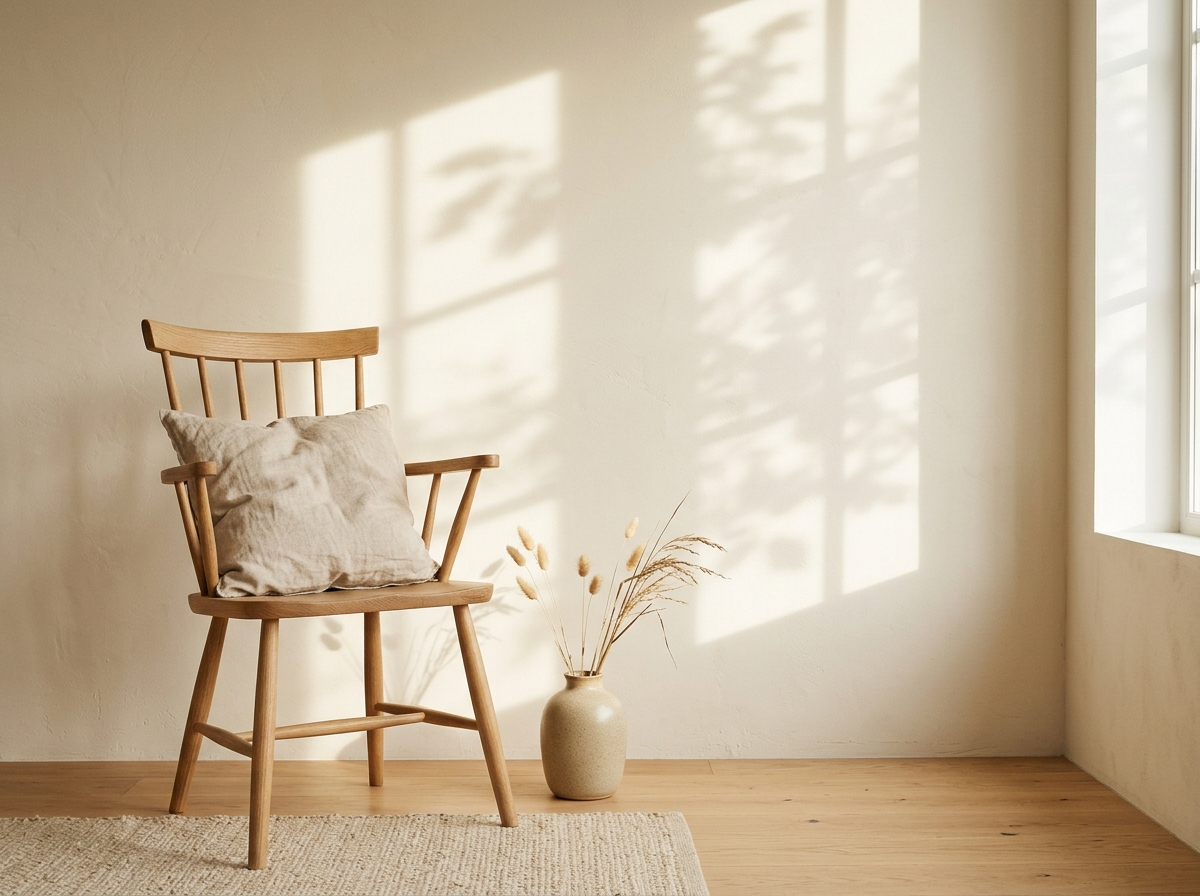
In traditional architectural design, empty floor area or bare walls are often viewed as wasted potential that must be quickly filled with shelving units, decorative art prints, or accent furniture. However, in oriental aesthetics and minimalist spatial design, negative space—known as ‘Ma’ in Japanese spatial philosophy—is recognized as the vital element that allows a room and its occupants to breathe.
When every surface in your living room or bedroom is covered with visual objects, books, cables, and trinkets, your eyes have nowhere to rest. Visual noise creates continuous sub-conscious cognitive processing, contributing to mental fatigue and restless anxiety. Introducing intentional negative space around your furniture creates visual pauses that quiet the nervous system.
Creating a dedicated “quiet corner” in your home is a simple yet transformative spatial exercise. Choose a corner of a sunlit room, remove all unnecessary furniture and visual clutter, and place only a single comfortable linen armchair, a low solid wood table, and a soft floor lamp. Leave the adjacent wall completely bare, allowing natural daylight and shadow to play across the blank plaster.
Color selection plays an crucial role in framing negative space. Soft, non-reflective warm neutrals—such as chalky lime-wash plaster, muted sand, soft ivory, and warm limestone—reflect natural light gently without glaring brightness. Avoiding stark blue-toned bright whites preserves a cozy, welcoming atmosphere during grey winter afternoons.
Curating objects within negative space requires a disciplined approach to display. Rather than displaying twenty souvenirs on a mantelpiece, display a single, beautifully sculpted stoneware vase or a solitary dried branch. By giving objects generous breathing room, their form, material texture, and shadow silhouette become celebrated focal points.
Designing with negative space is ultimately a reflection of inner clarity. When we strip away excess domestic belongings, we discover that physical emptiness is not a void, but a quiet luxury rich with possibility. Simplify your living environment, embrace bare surfaces, and let negative space restore tranquility to your daily home life.
Cultivating an intentional domestic environment is an ongoing practice of mindfulness and creative discipline. Your home should act as a tranquil sanctuary that shelters your mind from the hyper-stimulated pace of modern urban existence. By surrounding yourself with natural textures, living botanical greenery, and functional handmade objects, you transform routine domestic tasks into grounding, peaceful daily rituals.
Sensory harmony within your living space requires paying thoughtful attention to light, acoustic resonance, and air quality. Opening windows each morning to allow fresh air to circulate, lighting pure beeswax candles during quiet evening hours, and replacing harsh synthetic room sprays with pure organic botanical essential oil diffusers creates a welcoming, non-toxic atmosphere that nourishes both body and mind.
In the end, slow living is not about perfection or rigid aesthetic rules; it is about making space for what truly matters in your daily life. Whether you are savoring a warm morning cup of tea, tending to a windowsill herb garden, or sitting quietly reading a book in a favorite linen chair, embracing quiet moments restores inner balance and enriches your lived experience.
Domestic sanctuary design is rooted in the deliberate alignment of physical objects with your daily mental wellness. By replacing synthetic plastic home decor with handcrafted ceramic vessels, solid timber furniture, and organic woven textiles, you establish a warm, tactile living environment that gently calms the nervous system.
Creating quiet daily rituals—such as morning journal writing, afternoon tea preparation, or evening reading beneath soft ambient lamps—anchors your attention in the present moment. These slow practices shield your cognitive focus from digital distractions and cultivate a profound sense of domestic contentment.