
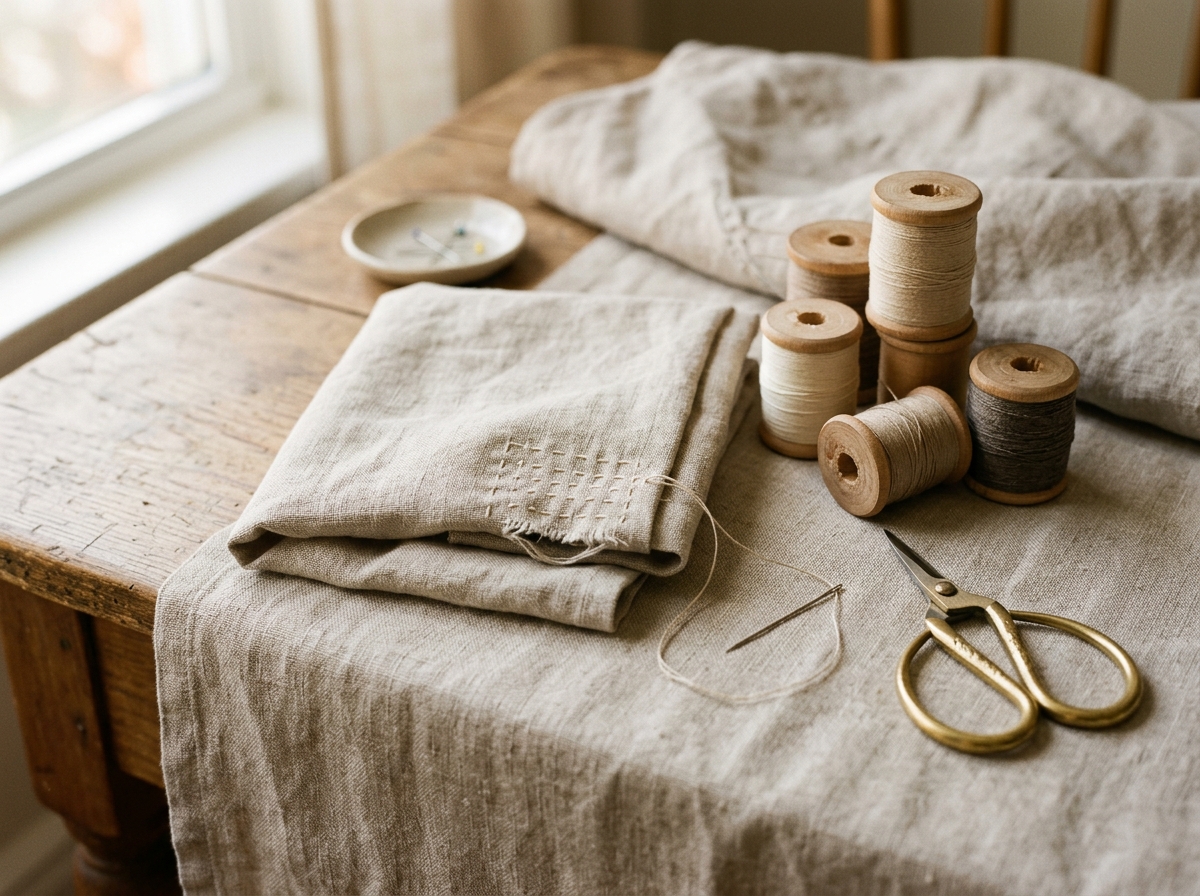
In our modern throwaway culture, a missing button, a frayed cuff, or a small tear in a sweater is often treated as a death sentence for a garment. Millions of tons of wearable textiles end up in landfills every year simply because we have lost touch with basic mending skills. Mindful tailoring invites us to reverse this trend by celebrating repair as a creative, honoring act that extends the life of our favorite clothes.
Visible mending, inspired by the ancient Japanese technique of Sashiko (meaning “little stabs”), transforms fabric damage into decorative storytelling. Using contrasting cotton thread and simple running stitches, Sashiko reinforces worn denim knees or elbow patches with geometric grid patterns. Far from hiding the wear and tear, visible mending proudly highlights the journey and history of the garment.
In addition to repair, custom tailoring is the secret weapon of a well-curated wardrobe. Most off-the-rack clothing is designed for generalized mass-market body averages, leading to ill-fitting shoulders, sagging waistlines, or overly long hems. Taking your thrifted or old clothing to a local tailor—or learning basic alteration techniques at home—transforms good garments into bespoke masterpieces that flatter your unique shape.
Simple alterations can completely revitalize forgotten closet items. Tapering wide trousers, shortening a boxy blazer, or replacing cheap plastic buttons with carved horn or mother-of-pearl buttons instantly elevates the perceived quality of a garment. Reshaping clothes encourages you to view your wardrobe as an evolving library of raw materials rather than a static collection.
Building a basic home mending kit requires only a few quality tools: sharp fabric scissors, a set of Japanese embroidery needles, natural linen and silk threads, beeswax for thread strengthening, and a wooden darning mushroom for repairing socks and knitwear. Spending a quiet Sunday afternoon sitting by a sunlit window repairing a beloved sweater is a deeply meditative, grounding ritual.
Mindful tailoring alters our emotional relationship with our possessions. When you invest time and care into mending an item, it becomes uniquely yours, infused with personal memories and physical effort. By choosing to repair rather than replace, you take a firm stance against fast fashion waste and cultivate a deeper, more romantic connection with your personal wardrobe.
Sartorial intention extends far beyond the physical boundaries of your wardrobe. It influences the way you move through space, interact with artisanal creators, and value the raw materials of our earth. When we choose quality over quantity, each garment becomes an investment in sustainable heritage, preserving traditional weaving and tailoring techniques for future generations.
In addition to fiber selection and fit, color psychology plays a fundamental role in creating a calming personal aesthetic. Neutral tones derived from natural earth pigments—such as chalky clay, river stone grey, dried wheat, and dark indigo—harmony effortlessly with your natural complexion. These shades reflect soft ambient light rather than absorbing or reflecting harsh unnatural glares, providing visual peace to those around you.
Building a enduring wardrobe is ultimately an ongoing practice of mindful curation and personal expression. As you care for your clothes, repair small flaws, and wear them through changing seasons, your personal style evolves into a authentic reflection of your values. Honor the hands that crafted your garments, treasure natural fibers, and step out into the world with confidence and grace.
Sartorial choices reflect our internal value system and physical connection to the environment. Choosing garments crafted from certified organic textiles or vintage natural fibers supports sustainable agricultural practices and reduces toxic industrial waste, allowing you to build a wardrobe that radiates quiet elegance and ethical alignment.