
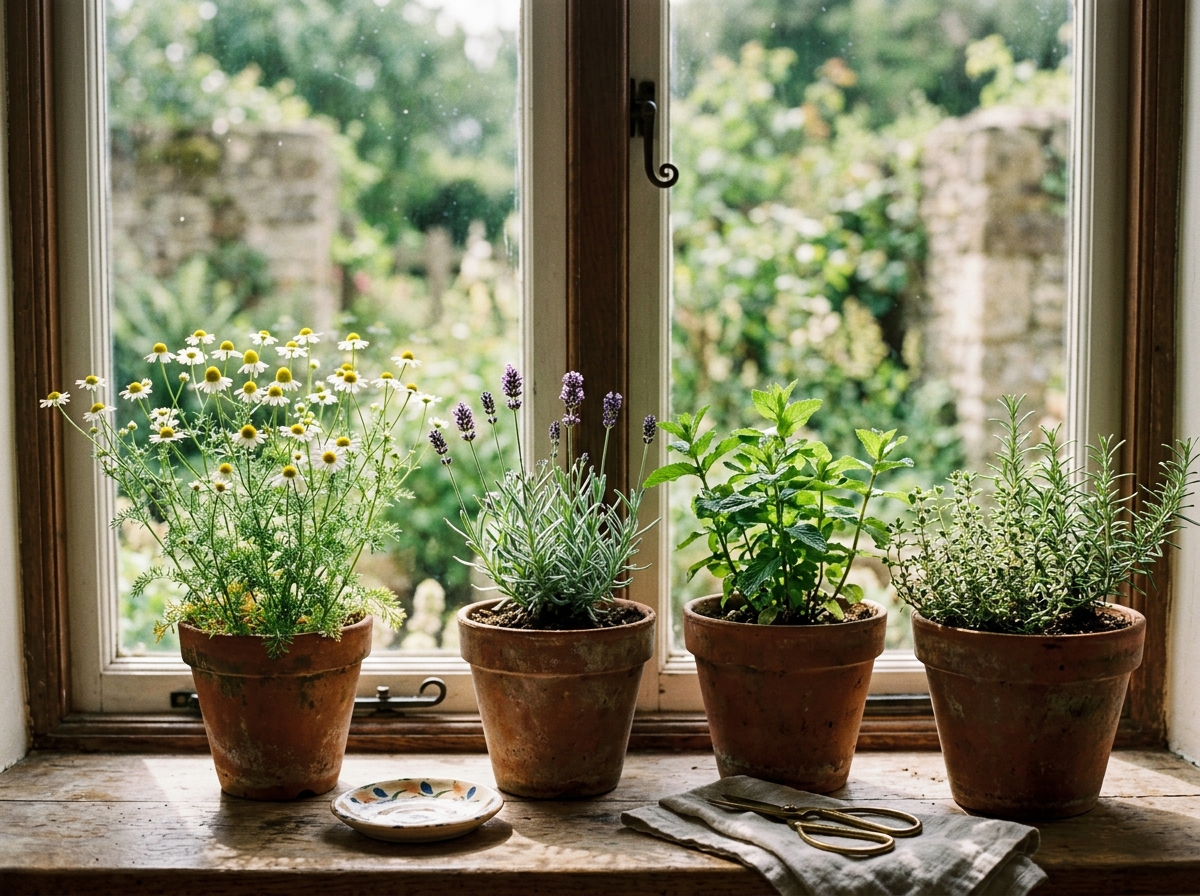
There is a unique joy in plucking fresh chamomile blossoms or fragrant rosemary sprigs from your own windowsill garden to brew an afternoon herbal infusion. Even in compact urban apartments without access to a outdoor yard, cultivating a indoor container herb garden brings living greenery, soothing scents, and culinary delights into your daily domestic routine.
Chamomile is one of the most gentle yet rewarding herbs for container gardening. German chamomile (Matricaria recutita) thrives in sunny windowsills planted in breathable terra cotta clay pots filled with well-draining organic soil mix. As its delicate daisy-like flowers bloom throughout spring and summer, they release a sweet, honey-apple scent that gently fills the room.
Breathable clay pots are the ideal vessels for medicinal herb cultivation. Unlike non-porous plastic containers that trap excess moisture around root systems, terracotta clay allows air and moisture to evaporate through its sidewalls, preventing root rot and encouraging healthy root respiration. Pairing clay pots with matching terracotta saucers creates a classic, rustic botanical aesthetic.
Harvesting chamomile and herbs requires a mindful, harvesting technique. Snip sweet chamomile flowers at full bloom on sunny mornings after dew has evaporated, when essential oils are concentrated. Spread the fresh blossoms on a clean wooden tray lined with unbleached parchment paper in a warm, shady room to dry naturally for five days before storing them in airtight glass jars.
Steeping a cup of fresh homegrown chamomile tea is a delightful sensory evening ritual. Pouring boiling water over dried golden blossoms unleashes sweet apple notes and natural apigenin compounds that soothe the nervous system, quiet mental chatter, and prepare the body for deep, restorative sleep.
Cultivating an indoor herb garden teaches us gentle lessons in patience, seasonality, and nurturing care. Tending to green living plants daily reminds us that growth cannot be rushed by artificial demands. Bring a few clay pots onto your sunny windowsill, sow organic seeds, and enjoy the quiet pleasure of harvesting your own botanical sanctuary at home.
Cultivating an intentional domestic environment is an ongoing practice of mindfulness and creative discipline. Your home should act as a tranquil sanctuary that shelters your mind from the hyper-stimulated pace of modern urban existence. By surrounding yourself with natural textures, living botanical greenery, and functional handmade objects, you transform routine domestic tasks into grounding, peaceful daily rituals.
Sensory harmony within your living space requires paying thoughtful attention to light, acoustic resonance, and air quality. Opening windows each morning to allow fresh air to circulate, lighting pure beeswax candles during quiet evening hours, and replacing harsh synthetic room sprays with pure organic botanical essential oil diffusers creates a welcoming, non-toxic atmosphere that nourishes both body and mind.
In the end, slow living is not about perfection or rigid aesthetic rules; it is about making space for what truly matters in your daily life. Whether you are savoring a warm morning cup of tea, tending to a windowsill herb garden, or sitting quietly reading a book in a favorite linen chair, embracing quiet moments restores inner balance and enriches your lived experience.
Domestic sanctuary design is rooted in the deliberate alignment of physical objects with your daily mental wellness. By replacing synthetic plastic home decor with handcrafted ceramic vessels, solid timber furniture, and organic woven textiles, you establish a warm, tactile living environment that gently calms the nervous system.
Creating quiet daily rituals—such as morning journal writing, afternoon tea preparation, or evening reading beneath soft ambient lamps—anchors your attention in the present moment. These slow practices shield your cognitive focus from digital distractions and cultivate a profound sense of domestic contentment.