
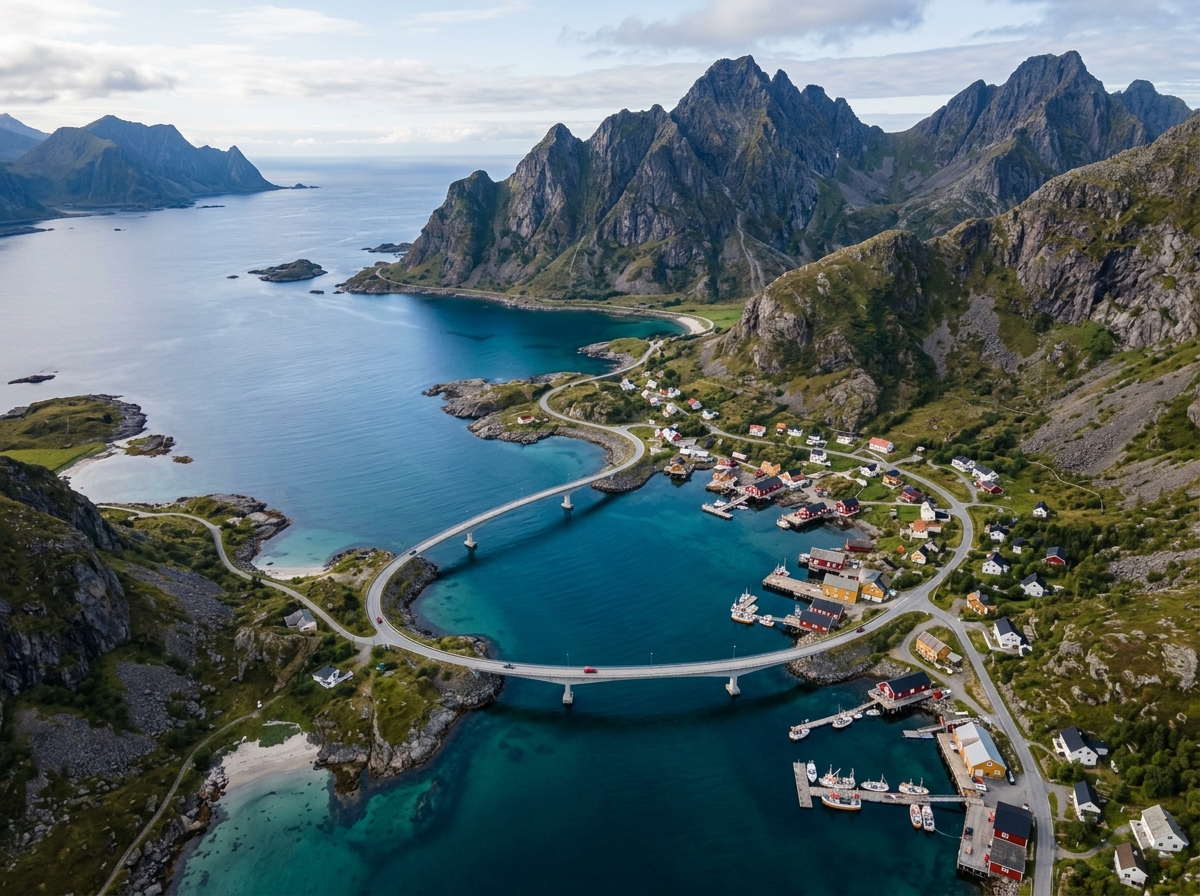
Western Norway’s fjord coastline is a breathtaking masterpiece of geological drama, where narrow saltwater inlets carved by ancient glaciers cut deep into towering granite mountain ranges. While commercial cruise ships crowd the major tourist ports, exploring the quiet, lesser-known fjord arms by wooden electric boat or sea kayak reveals a world of profound stillness, mist-shrouded peaks, and untouched wilderness.
Gliding across the dark mirror-like water of a secluded fjord in early morning mist is a surreal sensory experience. Vertical granite cliffs rise over a thousand meters straight up from the water’s edge, their tops capped with glistening glaciers. The only sounds disturbing the absolute silence are the gentle drip of water from your paddle and the distant thunder of snowmelt waterfalls cascading down rocky precipices.
Nestled along tiny grassy ledges at the base of these towering cliffs sit historic red-painted timber farmsteads and wooden boat houses (Nausts). For centuries, hardy Norwegian fjord farmers lived in near-complete isolation, accessible only by water, cultivating apple orchards on sun-warmed fjord slopes and fishing for wild salmon in the clear glacial depths.
Visiting these remote fjord communities offers a glimpse into sustainable Nordic coastal living. Local orchards produce world-class artisanal apple ciders fermented in oak barrels, while nearby coastal smokehouses cure wild sea trout over sweet juniper wood shavings. Simple meals enjoyed in historic wooden dining rooms reflect centuries of harmonious coastal stewardship.
Hiking up ancient stone trails built by mountain farmers leads to panoramic viewpoints overlooking the entire fjord network below. Standing high above the fjord as shifting low clouds weave through granite peaks, you feel an overwhelming sense of nature’s vast scale and eternal stillness, putting human worries into peaceful perspective.
Exploring Norway’s misty fjords teaches us the value of quietude and environmental reverence. In a world full of noise and artificial speed, the quiet waters and majestic granite walls of the fjords stand as an eternal monument to nature’s quiet majesty. Journey north, embrace the mist, and discover true stillness in the fjords.
Slow travel is a philosophy of presence, curiosity, and deep cultural respect. Rather than rushing across continents to check off famous tourist landmarks for photo opportunities, true wandering invites us to slow down, stay longer in quiet places, and immerse ourselves in the authentic rhythms, regional traditions, and natural landscapes of local communities.
Environmental stewardship and local economic support are essential pillars of responsible travel. Choosing locally-owned eco-lodges, dining at family-run eateries that source hyper-local seasonal ingredients, and traveling via low-impact transport—such as walking, cycling, or passenger trains—ensures that our presence enriches the places we visit without leaving a destructive footprint on fragile ecosystems.
The most profound travel memories are rarely found in guidebook highlights, but in unscripted moments of quiet connection: a warm conversation with a village artisan over morning coffee, a peaceful walk along a mist-shrouded coastal path, or watching the sunset cast golden light over ancient stone architecture. Pack light, leave space for spontaneity, and let the journey unfold gracefully.
Slow travel invites us to experience destinations with open curiosity, cultural humility, and environmental reverence. Rather than measuring travel success by the number of landmarks visited, staying longer in quiet regional hamlets allows you to connect authentically with local traditions, artisanal crafts, and natural landscapes.
Supporting regional economies and sustainable tourism practices ensures that sensitive natural ecosystems and historic architecture are preserved for future generations. Choosing family-operated guest houses, dining on hyper-local seasonal cuisine, and utilizing low-impact transportation enriches your travel experience while protecting local heritage.